Cockatoo Blog
Cockatoo Noise: How Loud They Are & How to Stop Screaming
Jul
Cockatoo noise is the number-one reason cockatoos are rehomed, so it deserves an honest answer before you bring one home. Cockatoos are genuinely loud – a screaming Moluccan or Umbrella can hit 120 to 135 decibels, roughly as loud as a rock concert or a chainsaw, and that call carries for miles in the wild. Every cockatoo will vocalise daily; the goal is not silence, but understanding why they scream and keeping it within reason.
We hand-raise ten species and place them with families every week, so we hear the noise question constantly. Here is the truthful picture: how loud each species really is, why they scream, and what actually reduces it.
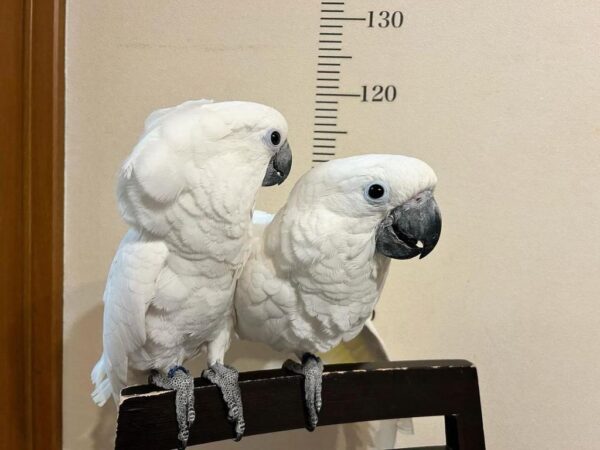
How loud is a cockatoo, really?
Loud. At full volume the big white cockatoos are among the loudest of all companion parrots. Their natural contact call – the sound they make at dawn and dusk to locate the flock – is designed to travel across open country, so in a living room it is piercing. Expect a burst of loud calling in the early morning and again around sunset; that flock-calling rhythm is instinctive and cannot be trained away entirely.
| Species | Noise level | Notes |
|---|---|---|
| Moluccan | Very high | Loudest cockatoo; screams carry through a whole house |
| Umbrella | Very high | Loud and frequent, especially when seeking attention |
| Sulphur-Crested | High | Harsh, screeching contact call |
| Major Mitchell’s | Moderate-high | Loud but less relentless |
| Galah (Rose-Breasted) | Moderate | Chattier than screamy; more manageable |
| Goffin’s | Moderate | Smaller, so a higher-pitched but less powerful call |
| Gang Gang | Lower | Distinctive creaky-door call; among the quieter species |
Why cockatoos scream
Screaming is communication, not malice. Understanding the cause is the whole battle, because the fix depends on the reason. The common triggers are:
- Flock calling – instinctive dawn and dusk contact calls. Normal and expected.
- Attention-seeking – the bird has learned that screaming brings you running. The most common learned cause.
- Boredom – an under-stimulated cockatoo with nothing to shred will scream to fill the void.
- Fear or alarm – a new object, a predator at the window, sudden change.
- Loneliness – these are intensely social birds; isolation produces distress calls.
- Hormonal surges – breeding season can ramp up volume and frequency.
The one to watch is attention-seeking, because owners accidentally train it. If a bird screams and you rush over – even to say “no” – you have just rewarded the scream. Feather-plucking and screaming often share the same root cause: an under-met social and mental need, the same issue we cover in our cockatoo care guide.

How to reduce cockatoo screaming
You cannot eliminate cockatoo noise, but consistent handling can cut excessive screaming dramatically. What works:
- Do not reward the scream. Wait for a pause, then give attention. Reward quiet, calm behaviour instead – this is the single most important change.
- Enrich relentlessly. Rotate destructible foraging toys so the beak and brain stay busy. A tired, occupied cockatoo is a quieter one.
- Protect sleep. 10 to 12 hours of dark, quiet sleep prevents the crankiness that fuels screaming.
- Keep a routine. Predictable feeding, play and bedtime lower anxiety-driven calling.
- Answer the contact call softly. A quiet whistle back at dawn reassures the bird the flock is near, so it does not escalate.
- Never yell back. To a cockatoo, your raised voice is you joining the flock scream – it makes things louder, not quieter.
The quietest cockatoos
If noise is a serious concern, no cockatoo is truly quiet, but the Gang Gang, Galah and smaller Goffin’s are more manageable than the big Moluccans and Umbrellas. Honestly, though, if you live in an apartment with thin walls or noise-sensitive neighbours, a cockatoo may not be the right bird at all – a lesson worth learning before purchase, not after.
Cockatoo noise FAQ
How loud are cockatoos in decibels?
A screaming large cockatoo can reach 120 to 135 decibels – comparable to a chainsaw or a rock concert. Their contact call evolved to carry across open landscapes.
What is the loudest cockatoo?
The Moluccan cockatoo is generally considered the loudest, closely followed by the Umbrella. Both have powerful, far-carrying screams.
Can you train a cockatoo to be quiet?
You cannot stop natural dawn and dusk calling, but you can greatly reduce excessive attention-screaming by rewarding quiet behaviour, never reacting to screams, and providing enough enrichment, sleep and routine.
Are any cockatoos quiet?
No cockatoo is silent, but Gang Gangs, Galahs and Goffin’s are quieter than the large white species. Cockatiels, a small cockatoo relative, are much quieter again.
Cockatoo noise is manageable with the right expectations and consistency, but it is never zero – go in knowing that. If you are ready for a loud, loving, decades-long companion, explore our hand-raised cockatoo birds for sale, or read more on the realities of whether cockatoos make good pets.
